By Dr. Brooke Meinema
Research into ice baths (cold water immersion or CWI) for females has expanded significantly in recent years, moving beyond general athletic recovery to look at how women's unique physiology and hormonal cycles interact with extreme cold.
While many of the cardiovascular and anti-inflammatory benefits are universal, several key findings are specific to women:
1. Hormonal & Menstrual Cycle Interaction
Recent research suggests that the effectiveness and "shock" of an ice bath may change depending on where a woman is in her cycle:
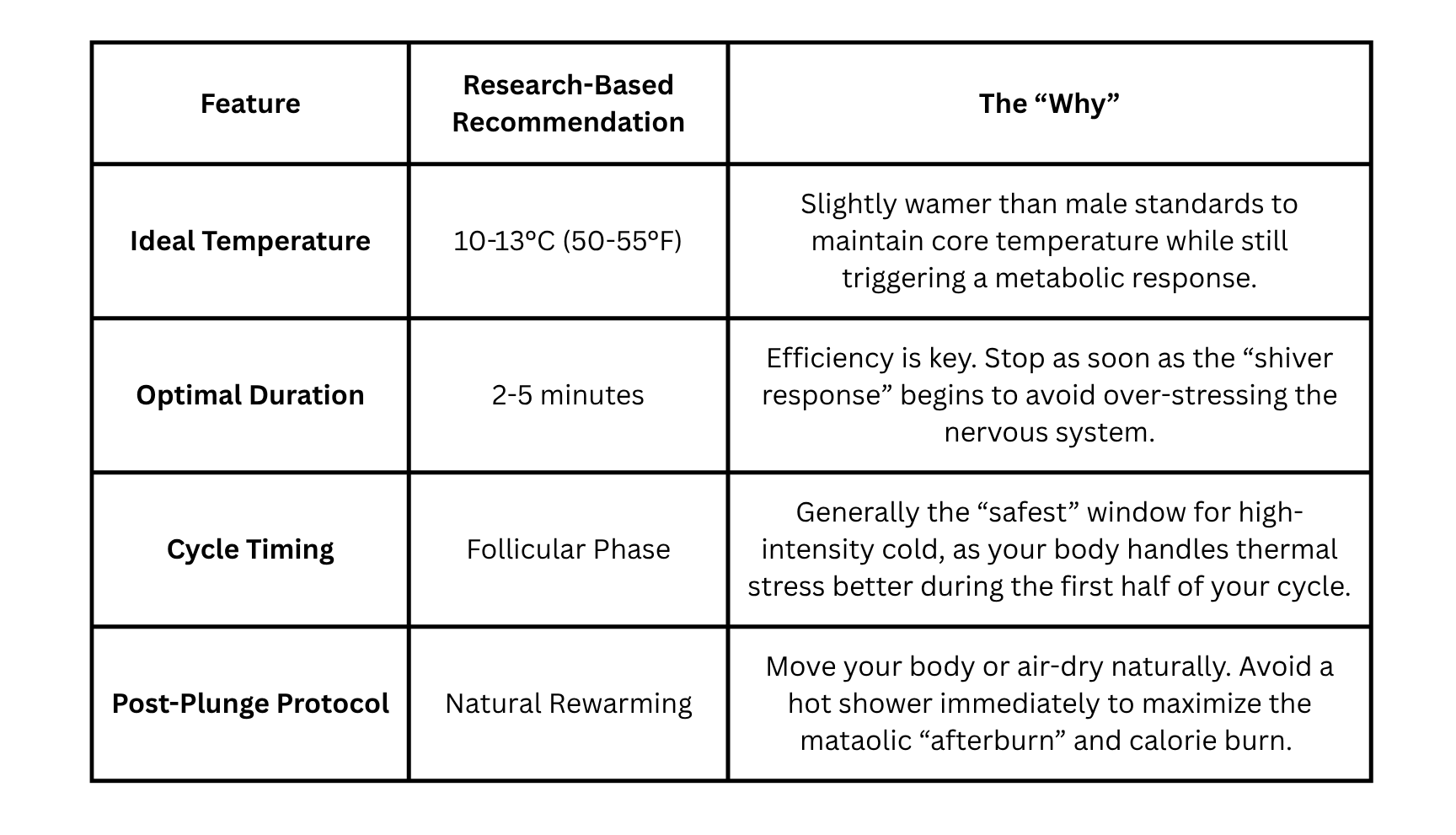
Follicular Phase (Days 1–14): Estrogen is dominant, and the body generally handles the stress of cold better. Many women find CWI more tolerable during this time.
Luteal Phase (Days 15–28): After ovulation, progesterone rises, which can increase core body temperature and make the body more sensitive to stress. Some experts suggest that the "cold shock" may feel harsher during this phase, and because progesterone is a calming hormone, the spike in cortisol from an ice bath might be counterproductive for some.
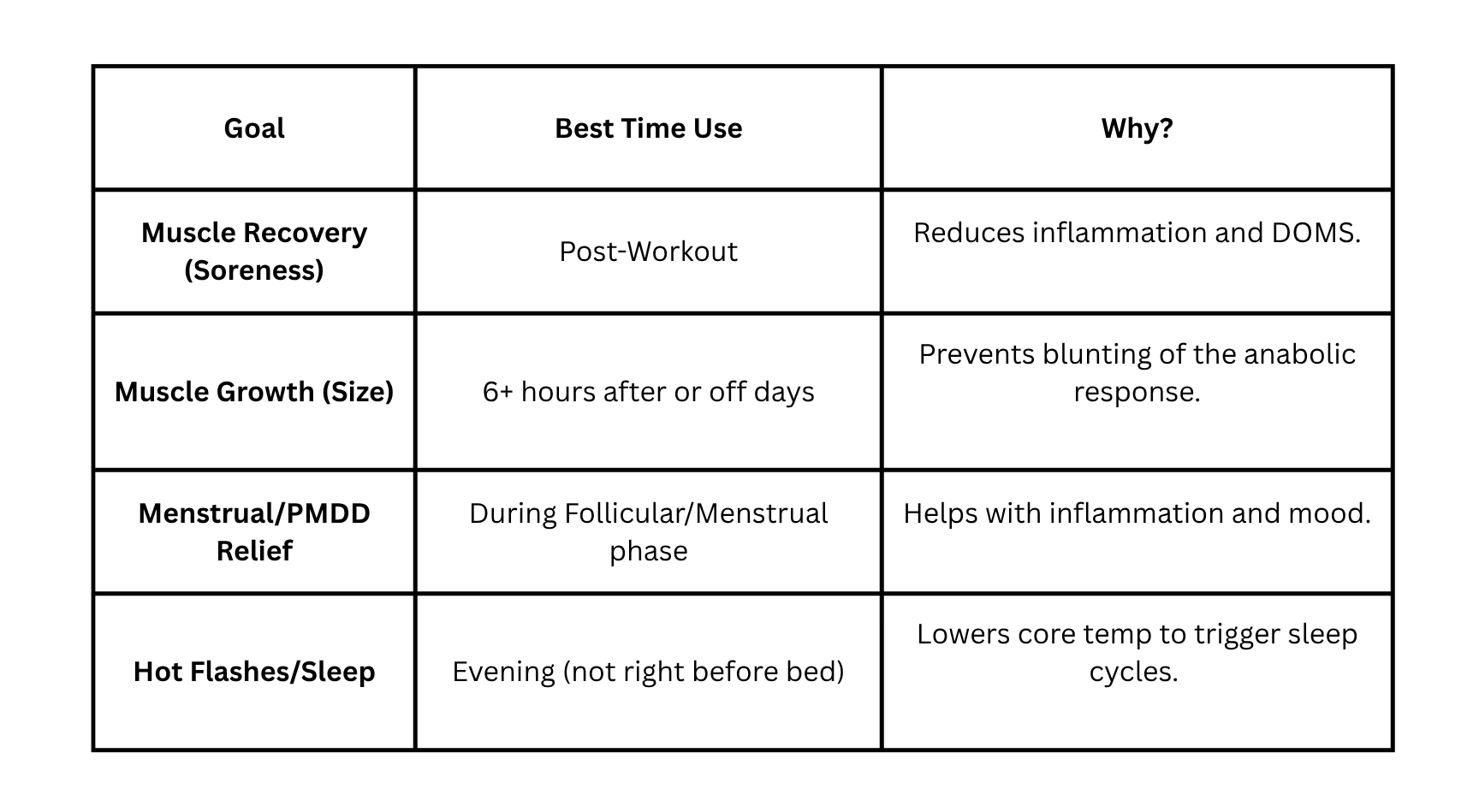
Symptom Relief: A large 2024 survey of over 1,100 women found that CWI significantly improved menstrual symptoms for many, specifically:
Anxiety: 46.7% reduction
Mood Swings: 37.7% improvement
Period Pain: Many reported reduced cramping due to the anti-inflammatory and numbing effects.
2. Perimenopause and Menopause
For women in mid-life, research indicates that cold therapy can be a powerful tool for managing vasomotor symptoms:
Hot Flashes: Studies show a ~30% reduction in the frequency and severity of hot flashes.
Mental Health: In the same large-scale survey, 46.9% of perimenopausal women reported reduced anxiety and 34.5% reported better mood stability.
Sleep: CWI can help lower core body temperature before bed, which may improve sleep quality, a common struggle during menopause.
3. Performance vs. Aesthetics (Hypertrophy)
The "interference effect" is a critical finding for women who lift weights:
Recovery: Ice baths are excellent for recovering from endurance sessions or high-intensity interval training (HIIT).
Muscle Growth (Hypertrophy): If the primary goal is building muscle size, research consistently shows that taking an ice bath immediately after resistance training can stunt muscle growth. The cold blunts the natural inflammatory response required for muscle fibers to repair and grow larger.
Pro-tip: If you are training for muscle size, wait at least 4–6 hours after your workout before plunging, or save the ice bath for "off" days.
4. Metabolic Health
Women naturally have different distributions of "brown fat" (metabolically active fat) than men. Research suggests that regular cold exposure can activate brown adipose tissue, which helps:
Improve insulin sensitivity.
Increase resting metabolic rate.
Potentially help balance hormones in women with conditions like PCOS by improving metabolic markers.
5. Recovery Spotlight: Female-Specific Cold Plunge Guidelines
For many women, strategic cold exposure can support the metabolic "afterburn" and help manage the systemic inflammation that sometimes follows high-intensity bone-loading sessions.
When to plunge: