Getting back into running or high-impact exercise after having a baby can feel overwhelming. Between navigating sleep deprivation, newborn care, and a body that feels completely different than it did nine months ago, it is tough to know where to start or when it’s truly safe to pick up the pace.
Whether you delivered vaginally or via C-section, your body has gone through incredible structural, hormonal, and muscular shifts. Returning to exercise isn't about jumping straight back into week 1 of a 5K training plan at six weeks postpartum; it's about building a solid foundation so you can run, jump, and lift without pain, heaviness, or leakage.
Let's break down current clinical research and evidence-based guidelines to map out your postpartum movement journey step by step.
Step 1: Physical Activity in the First 12 Months
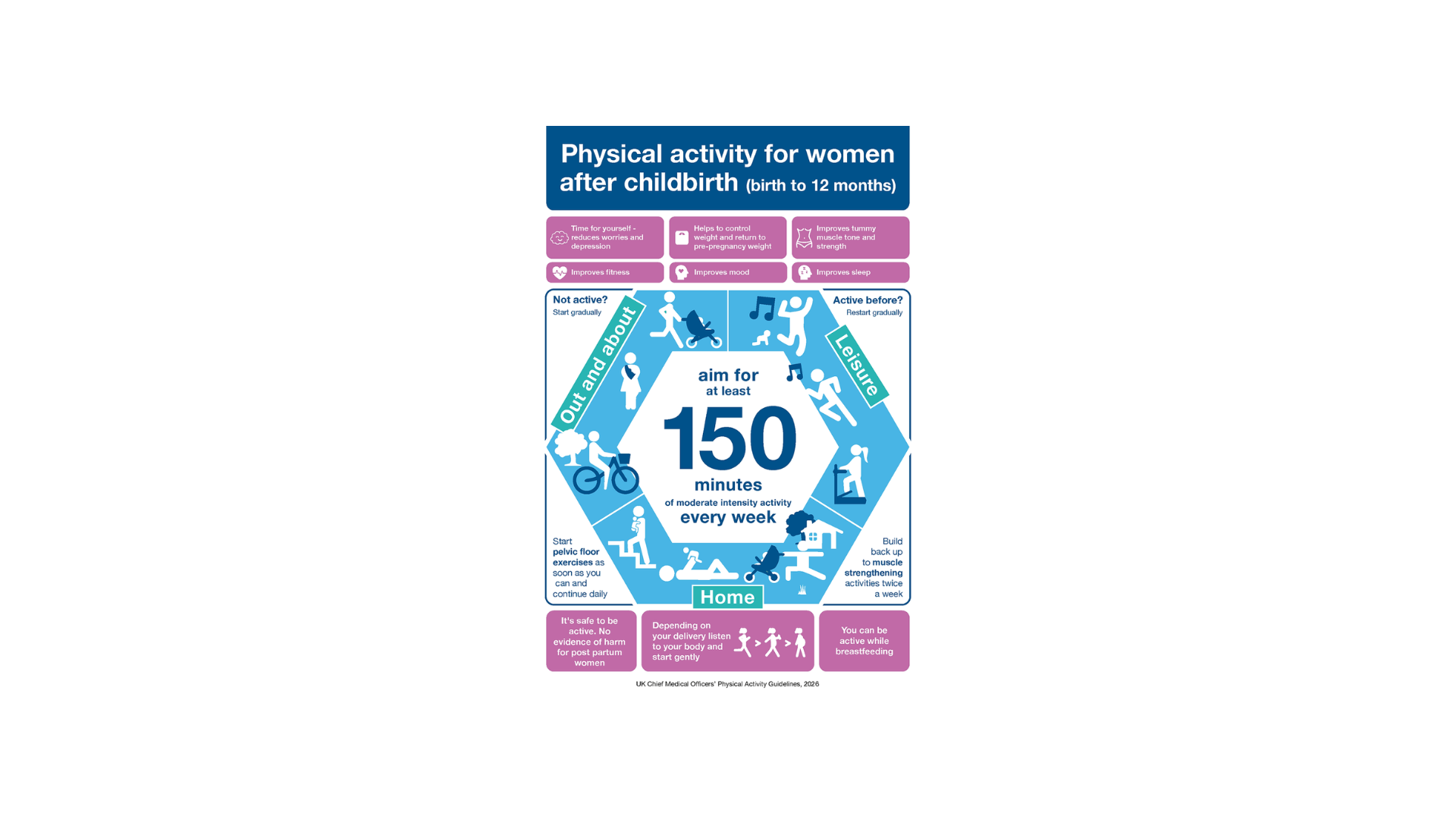
According to the UK Chief Medical Officers' Physical Activity Guidelines, returning to movement is not only safe, but hugely beneficial for postpartum physical and mental health. Regular physical activity reduces worries and depression, improves mood, enhances sleep quality, restores tummy muscle tone, and boosts overall stamina.
The general benchmark is to aim for at least 150 minutes of moderate-intensity activity per week, built up gradually over time:
Start pelvic floor exercises early: Begin gently in the immediate postpartum period as soon as you feel ready.
Build up muscle-strengthening activities: Target major muscle groups at least twice a week.
Listen to your delivery recovery: Tailor your progression based on whether you had a vaginal or cesarean birth. If you are breastfeeding, stay well-hydrated and ensure proper sports bra support.
Step 2: The Milestone Roadmap (Weeks 0 to 14+)
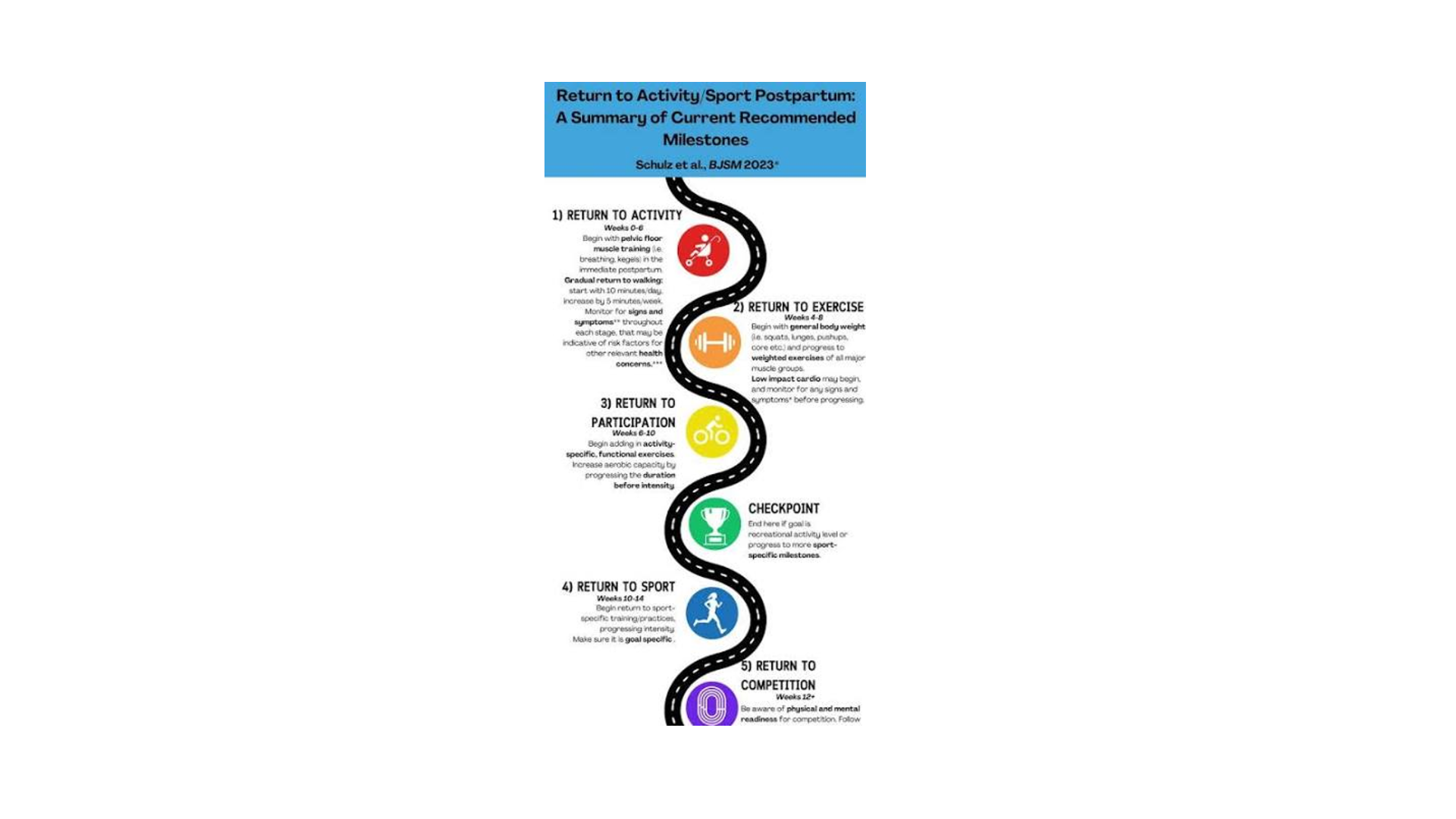
Research by Schulz et al. (BJSM, 2023) breaks postpartum physical activity into five progressive milestones:
Return to Activity (Weeks 0–6): Focus on breathwork, gentle pelvic floor muscle training, and light walking. Start with 10 minutes a day and increase gradually by 5 minutes per week while monitoring for symptoms like pain or bleeding.
Return to Exercise (Weeks 4–8): Begin bodyweight movements (squats, lunges, push-ups, core work) and low-impact cardio (stationary cycling, elliptical). Progress to light weighted exercises as tolerated.
Return to Participation (Weeks 6–10): Add activity-specific functional drills and increase aerobic duration before ramping up intensity. (If your goal is recreational fitness, this checkpoint may be your ideal landing zone!)
Return to Sport (Weeks 10–14): Transition into sport-specific practice and drills, customizing intensity to your personal goals.
Return to Competition (Weeks 12+): Reintroduce competitive efforts only when physical and psychological readiness are aligned.
Step 3: Are You Ready to Run? The 12-Week Guideline & Self-Assessment
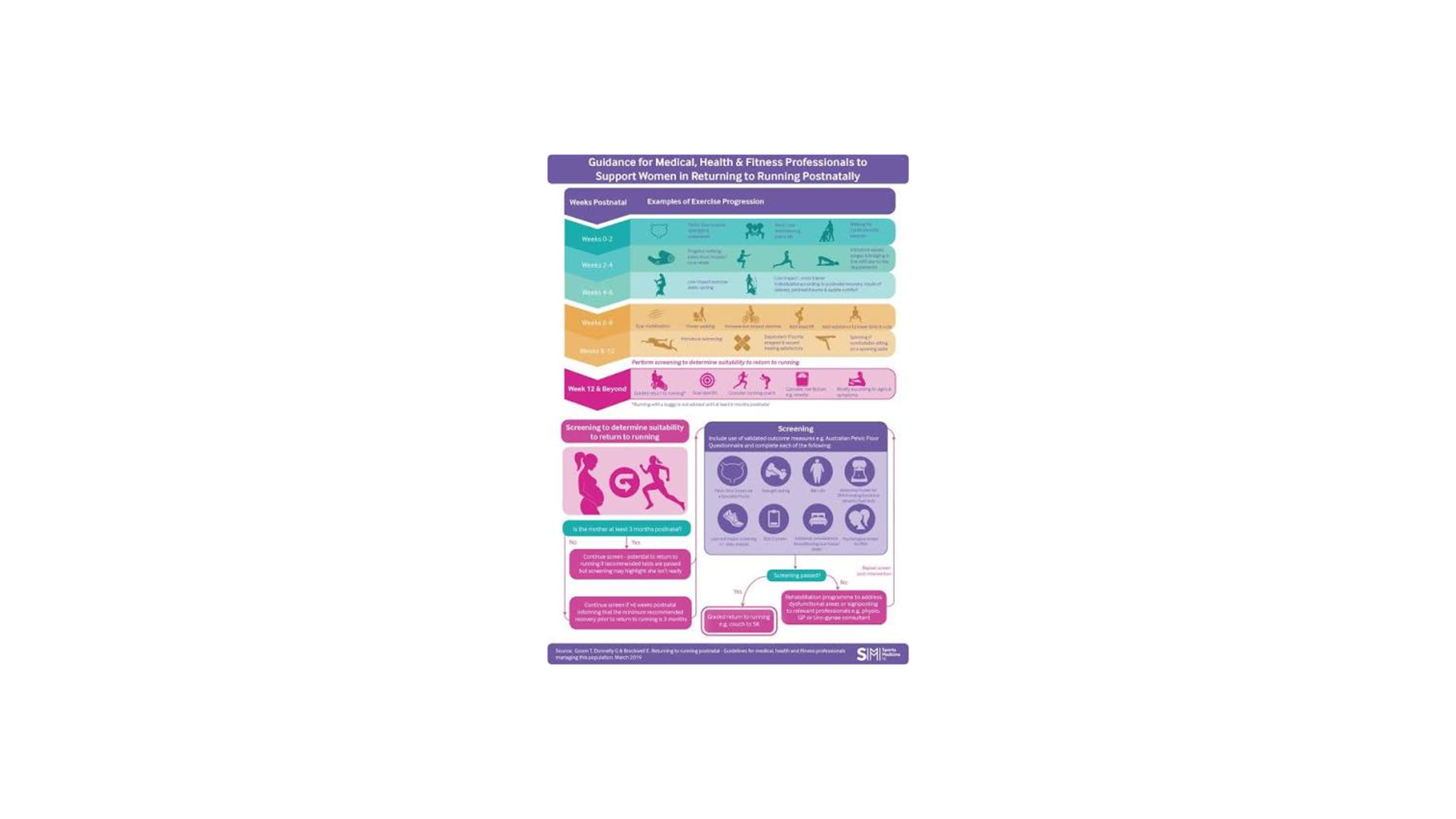
Current expert consensus (Goom, Donnelly, & Brockwell, 2019; James et al., 2024) strongly recommends waiting at least 12 weeks postpartum before resuming high-impact running. This allows time for pelvic tissue healing, muscle recovery, and hormonal stabilization.
Before taking those first running strides, perform this quick load-readiness test. Can you complete each of the following without pelvic pain, heaviness, dragging, or urinary incontinence?
[ ] Walk for 30 minutes continuously
[ ] Single-leg balance for 10 seconds per side
[ ] 10 single-leg squats per side
[ ] Jog on the spot for 1 minute
[ ] 10 forward bounds
[ ] 10 single-leg hops per side
[ ] 10 single-leg "running man" movements per side
If any of these tests trigger symptoms, it isn't a failure—it’s simply feedback that your pelvic floor or core needs a bit more conditioning before absorbing running impact.
Step 4: The 4-Stage Return-to-Running Progression
When you clear your assessment, progress through these four distinct phases:
Stage 1: Rebuilding Your Foundation (Weeks 0–6):* Focus on fast walking, pelvic tilts, sit-to-stands, bridges, and quick/held pelvic floor contractions.
Stage 2: Progressing Re-Conditioning (Weeks 6–12):* Reintroduce low-impact hops, grounded running, weighted strength training, and single-leg stability exercises.
Stage 3: Return to Running (Weeks 12–18):* Begin short running intervals (e.g., Couch-to-5K style), countermovement jumps, and gradual exposure to impact.
Stage 4: Consolidating Progress (Weeks 18+*): Build distance and speed toward pre-pregnancy levels or competitive running goals.
*Timeframes are general guides; individual recovery varies based on your unique delivery, healing, and sleep availability!
Key Takeaways & When to Get Extra Support
Returning to movement should bring joy and energy, not added stress or pain. Always keep these core principles in mind:
Listen to your body: If something doesn't feel right, slow down or modify.
C-Section considerations: Monitor scar tissue healing and adjust abdominal loading if you experience pulling or discomfort.
Gear up: Invest in a supportive, properly fitted sports bra to protect breast tissue and prevent thoracic spine strain.
If you experience pelvic pain, heaviness, leaking, or core dysfunction at any point in your recovery, don't wait or push through it. Seeing a specialized Pelvic Health Physical Therapist can help screen your core, assess pelvic floor function, and design an individualized rehab plan tailored to your body.
*The information is provided for educational and informational purposes only and represents general evidence-based guidelines. It is not intended as individual medical advice or a substitute for personalized clinical care. Every postpartum body, delivery, and recovery timeline is unique. To receive an individualized assessment and a custom plan to safely return to running and activity, come see me at Solstice Physical Therapy + Wellness.
References
James, M. L., Donnelly, G. M., Crone, D. M., Stiles, V. H., Evans, L., & Moore, I. S. (2024). Your Guide to Return to Running Following Childbirth: Co-designed with postpartum runners. Centre for Health, Activity and Wellbeing Research (CAWR), Cardiff Metropolitan University & Prifysgol Caerdydd.
UK Chief Medical Officers. (2026). Physical Activity Guidelines: Physical activity for women after childbirth (birth to 12 months). UK Department of Health & Social Care.
Schulz, et al. (2023). Return to Activity/Sport Postpartum: A Summary of Current Recommended Milestones. British Journal of Sports Medicine (BJSM).
Goom, T., Donnelly, G., & Brockwell, E. (2019). Returning to running postnatal – guidelines for medical, health and fitness professionals managing this population. Sports Medicine Association UK / SIMI.