
Sexual lubricants are often thought of as a simple comfort product, but they can have a meaningful impact on pelvic health, especially for people who are prone to irritation, recurrent infections, dryness, or pelvic pain. For some individuals, lubricant choice is neutral. For others, it can influence vaginal or rectal irritation, changes in bacterial balance, recurrent urinary tract infections (UTIs), or symptoms of bacterial vaginosis (BV).
Understanding a few key factors (pH, osmolality, and ingredients) can make a significant difference in choosing a product that supports rather than disrupts tissue health.
Vaginal and rectal pH: what’s actually normal?
Vaginal pH (pre-menopausal)
3.8–4.5
This acidic environment supports healthy Lactobacillus bacteria, which help protect against infection and maintain tissue health.
Vaginal pH (peri-menopausal, menopausal, post-menopausal)
Often rises to ~5.0–7.0+
With decreased estrogen, the vaginal lining becomes thinner and less acidic.
This shift can increase vulnerability to dryness, irritation, and infection risk.
This change is important when choosing lubricants and moisturizers, since what is “ideal” for a pre-menopausal vagina may not be ideal later in life.
Rectal pH
~7.0–8.0 (neutral to slightly alkaline)
The rectum is a different environment entirely, which is why rectal-safe lubricants often differ from vaginal formulations.
Osmolality: why “hydrating vs dehydrating” matters
Osmolality describes how a lubricant interacts with cells.
Hyperosmotic (high osmolality): pulls water out of cells → can increase dryness, irritation, and micro-damage to tissue
Iso-osmotic or low osmolality: more tissue-friendly and hydrating
The World Health Organization recommends lubricants be:
<1200 mOsm/kg
Ideally closer to ~380 mOsm/kg or lower
High-osmolality products can disrupt vaginal and rectal mucosa, especially with frequent use.
Ingredients: what to look for and what to avoid
Ingredients commonly best avoided (for sensitive tissue)
Glycerin / glycerol
Can increase yeast susceptibility in some individuals
Parabens
Endocrine-disrupting concerns (ongoing research)
Propylene glycol / glycols
Can be irritating for some users
May worsen sensitivity in people prone to BV or yeast infections
Nonoxynol-9
Can damage vaginal and rectal lining
Chlorhexidine gluconate
Can disrupt healthy bacterial flora
Ingredients that are generally more supportive
Aloe vera
Soothing, hydrating, tissue-calming
Lactic acid
Helps maintain vaginal acidity (important for pre-menopausal tissue)
Citric acid
pH balancing agent (can support vaginal environment in appropriate formulations)
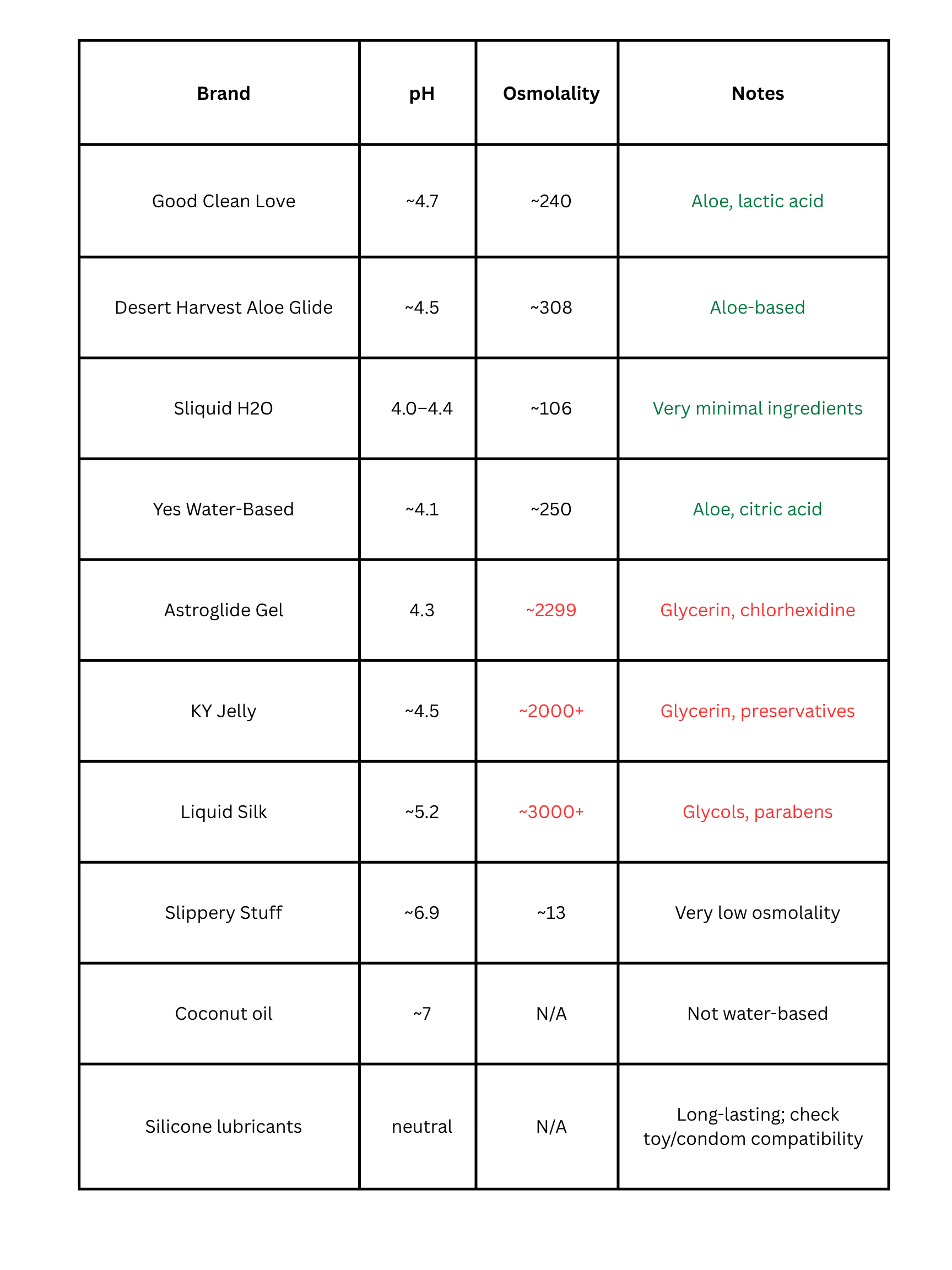
Common lubricants and their properties (examples)
Note: vaginal pH targets differ from rectal use. Rectal use generally benefits from neutral pH and low irritation potential.
Silicone-based lubricants
Silicone-based lubricants do not meaningfully affect vaginal pH or osmolality. They tend to be longer-lasting, but they may not be compatible with certain condoms, toys, or therapeutic tools. They can be a good option for individuals with high sensitivity, but compatibility matters.
The bottom line
Lubricants are not one-size-fits-all. For some people, they are simply comfort tools. For others, they directly influence symptoms like irritation, dryness, infection risk, and pelvic pain. Understanding pH, osmolality, and ingredients allows you to choose products that support your tissue rather than disrupt it.
If you are unsure what works best for your body, a pelvic floor physical therapist can help guide selection based on your symptoms and history.
